|
|||
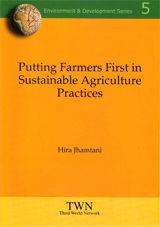
ABOUT THE BOOK Given the environmental and health concerns attached to conventional agriculture and genetically modified crops, the need for an ecologically and economically sustainable form of farming is pressing. This paper examines the key principles of sustainable agriculture, which is defined as a holistic approach to food production and community welfare, as opposed to the narrow technological approach of conventional agriculture. Drawing on local and traditional knowledge and driven by farmers' innovations, sustainable agriculture integrates technical know-how with the socio-economic and cultural aspects of the community in which it is practised. This paper provides examples of successful adoption of sustainable agriculture practices in developing-country farming communities. The author also outlines the elements needed to effect a broad-based transition to sustainable agriculture systems which will yield economically productive, ecologically sound and socially just outcomes. ABOUT THE AUTHOR HIRA
JHAMTANI is a researcher on environment and development issues, focusing
on Asia and Contents
1 Introduction
2 Principles and Approaches of Sustainable Agriculture
3 Sustainable Agriculture in Practice Pesticide-free village Adoption
of SRI in Experience
of an organic rice farmer in Lessons learnt 4 The Need for a Paradigm Shift How to Order the Book 
or Contact Third World Network at 131 Jalan Macalister, 10400 Penang, Malaysia. Tel: 04-2266159 Fax: 604-2264505 Email us for further information
|
|||